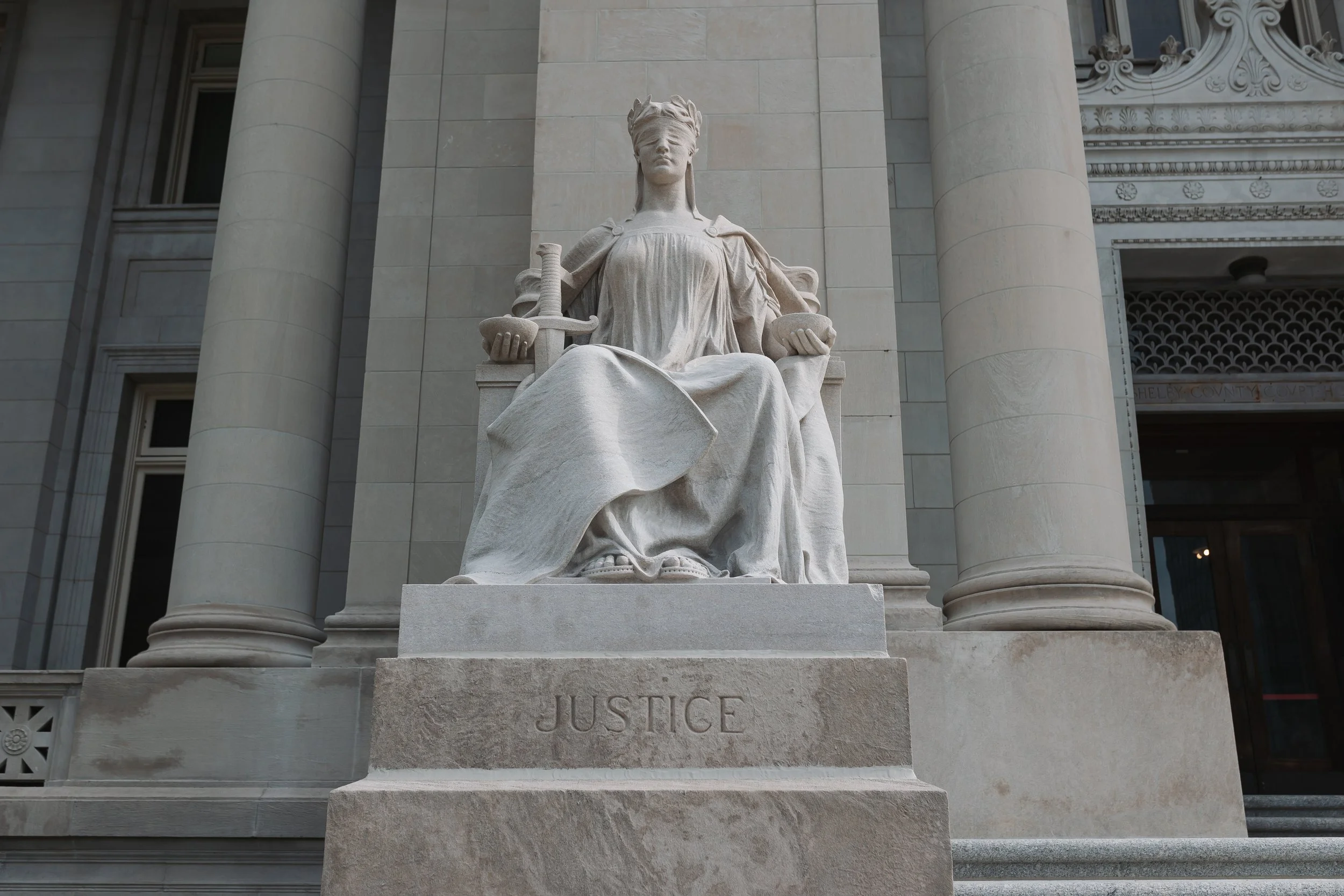
Constitutional Rights Are Human Rights
For more than three decades, Kelley Henry has fought for the lives and dignity of death row prisoners, and she now brings that experience to direct representation, consultation, and expert witness work through Human Rights Law Tennessee.
Human Rights Law Tennessee is the solo capital defense practice of Kelley Henry, dedicated to the constitutional rights of those facing the death penalty.

Why Human Rights Law?
The rights of people accused of crimes are fundamental human rights.
Our Constitution created a system designed to place limits on government power. Among its most important protections are those afforded to the individual when the government accuses that person of a crime. Those protections are not technicalities. They are an essential part of the system of checks and balances that protects us all.
Protecting the rights of the accused means insisting that the government exercise its extraordinary power lawfully, fairly, and with respect for human dignity. That work protects not only the person standing accused. It strengthens the rule of law and the principles of democracy on which our system depends.
Nowhere is that responsibility more profound than when the government seeks to take the life of one of its citizens.
The name Human Rights Law Tennessee reflects a simple conviction at the center of my work: rights do not exist only on paper. They belong to people.
Every person is more than the worst thing they have ever done.
Every client—no matter the accusation, no matter the circumstances—is a human being.
Their life has value. Their dignity matters
Core Principles:
Human dignity is not conditional.
A person's humanity does not depend on what they have done, what they are accused of doing, or how others perceive them.Constitutional rights are human rights.
The protections guaranteed by our Constitution belong to people, not abstractions. They safeguard liberty, dignity, and life against the exercise of government power.No human being can be reduced to a single act.
Every person is more than the worst thing they have ever done. Meaningful representation requires telling the whole human story—not simply the story of the crime.Government power must be tested.
When the government seeks to deprive a person of liberty, its exercise of power demands rigorous scrutiny. When it seeks to take a person's life, that scrutiny must be at its highest.The rights of the accused protect us all.
Constitutional protections matter most when they are extended to people who are feared, unpopular, or condemned. A government required to respect their rights is a government required to respect the rights of us all.Humanity must remain at the center of capital defense.
A death penalty case can become consumed by legal doctrines, records, evidence, and procedure. But at its center is a human life. That can never become invisible.


Why I Do This Work
I decided to become a public defender when I was in the eighth grade, although I didn't know it at the time.
I was struggling in history when my teacher assigned our class a mock trial and chose me to be the defense attorney. My opponent was one of the most popular boys in school. I promptly chose all of his friends as my witnesses, leaving a jury made up of kids more like me.
Then I went to work.
I studied the case. I prepared. I became completely absorbed in the challenge of standing beside someone accused and making the case for the defense.
And I got my first not guilty verdict.
It changed the direction of my life. I began studying harder. My grades improved. Eventually I went to law school knowing that I wanted to become a public defender.
At the University of Missouri-Kansas City School of Law, I spent much of my time volunteering in the public defender's office. There I met Sean O'Brien, who became my mentor and hired me as the first law clerk at the Missouri Capital Punishment Resource Center.
That was where I met Leonard Laws.
Leonard was a Vietnam veteran on Missouri's death row. By the time the Resource Center became involved in his case, he had given up his appeals and volunteered for execution. We tried to persuade him to change his mind. We couldn't.
I was still a law student when Leonard was executed.
On the day he was scheduled to die, Leonard called our office. But he didn't call to talk about himself. He called to check on me—to ask how I was doing and to reassure me. He told me that I should keep doing this work.
I have never forgotten that call.
I believed then, as I do now, that Leonard's life mattered. His story mattered. And I believed that if we had reached him sooner—before he had lost hope—perhaps things could have been different.
I made a commitment that has guided the rest of my career: I would do everything I could to make sure my clients did not lose hope. I would make sure their stories were heard. I would make sure they knew that they mattered.
The Case That Defined My Career
More Than A Case
For more than three decades, I have represented men and women facing the most consequential exercise of government power: a sentence of death.
I began as a trial lawyer in Missouri, trying more than two dozen felony cases before moving into the Capital Trial Division. I later returned to capital post-conviction work, first as a federal public defender in Arizona and then in Nashville, where I spent more than 26 years in the Capital Habeas Unit, 23 of them as its Chief.
During that career, I have represented clients at virtually every stage of capital litigation. I have stood beside clients under execution warrants. I have litigated in state and federal courts, argued before federal courts of appeals and the Tennessee Supreme Court, challenged methods of execution, worked with experts across disciplines, pursued clemency, and helped secure more than two dozen stays.
I was lead counsel for Gaile Owens in the clemency proceedings that resulted in the commutation of her death sentence and ultimately her release from prison. I was also lead counsel for Pervis Payne, who was removed from Tennessee's death row after 34 years when the law finally provided a mechanism for the courts to consider evidence of his intellectual disability.
Those outcomes matter enormously to me. But they are not why I do this work.
I do this work because the person matters.
A capital case can fill rooms with records. It can become consumed by legal doctrines, deadlines, expert reports, procedural rules, and arguments about events that happened decades earlier. In all of that complexity, it can become remarkably easy for the human being at the center of the case to disappear.
My job is to make sure that never happens.
No One Does This Work Alone
There is one other lesson that more than three decades of capital defense has taught me: this work is never the work of one lawyer.
The best capital defense is team defense.
Lawyers, investigators, mitigation specialists, paralegals, experts, clients, and families each see things that others cannot. Understanding a client's life requires curiosity, humility, and collaboration. Building the strongest legal case requires those same qualities.
Some of the accomplishments associated with my name belong to extraordinary teams of people who refused to give up when the odds were long. I have been fortunate to lead many of those teams, to learn from them, and to teach and mentor other capital defenders around the country.
Human Rights Law Tennessee grows out of that tradition.
I began this work believing that every person deserves a defense. Decades later, my understanding is deeper, but the essential conviction has not changed:
Every person is more than the worst thing they have ever done.
Every person has a story worth hearing.
Every person has dignity.
And every life matters.


Selected Litigation
01
Method Of Execution
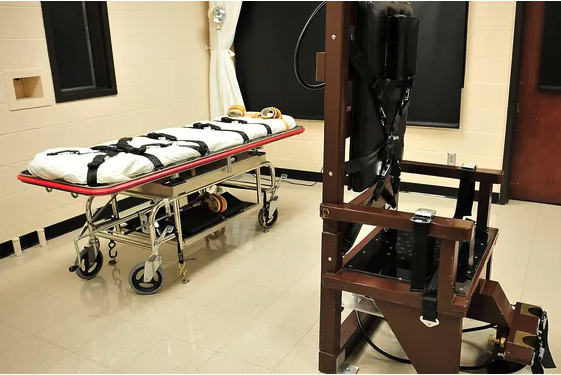
Serving as lead counsel for 29 Tennessee death row plaintiffs in a 2018 constitutional challenge to the state's lethal injection protocol, litigating the method of execution itself on behalf of clients across the state.
02
Lisa Montgomery
Kelley Henry represented Lisa Montgomery, a federal death row prisoner whose case raised significant questions of mental illness and trauma, working to bring the full scope of her history before the courts at the federal level.

03
Gaile Owens
Kelley Henry was lead counsel in the clemency campaign for Gaile Owens, whose death sentence was commuted by Governor Phil Bredesen; Owens was later released from prison after decades on death row.

For representation, consultation, or expert witness inquiries, please fill out the form below.
Kelley accepts appointments from federal and state courts for capital trials, appeals, and post-conviction proceedings. She also consults with law firms whose clients face the death penalty, and is available to serve as an expert witness in capital representation and mitigation.